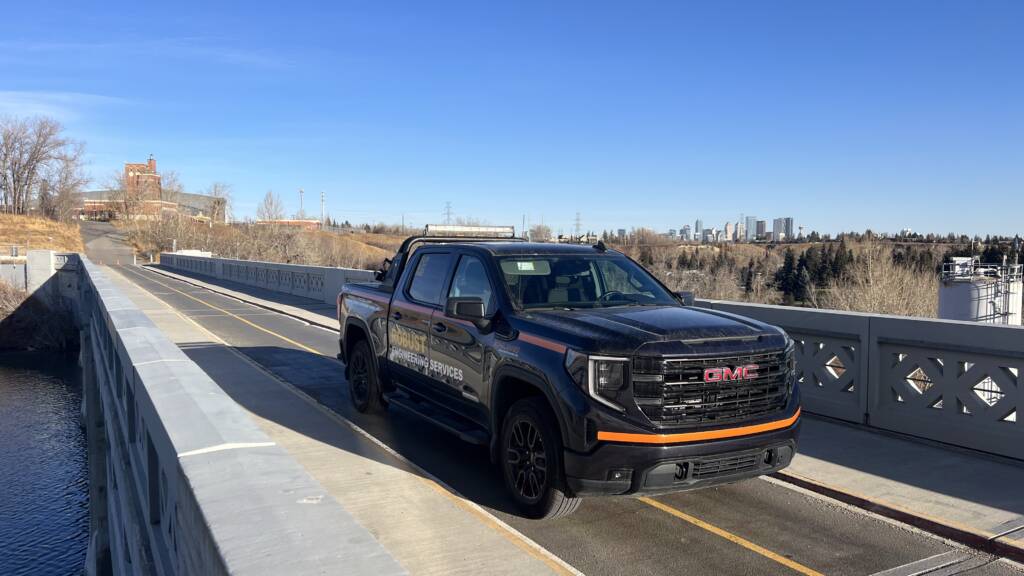
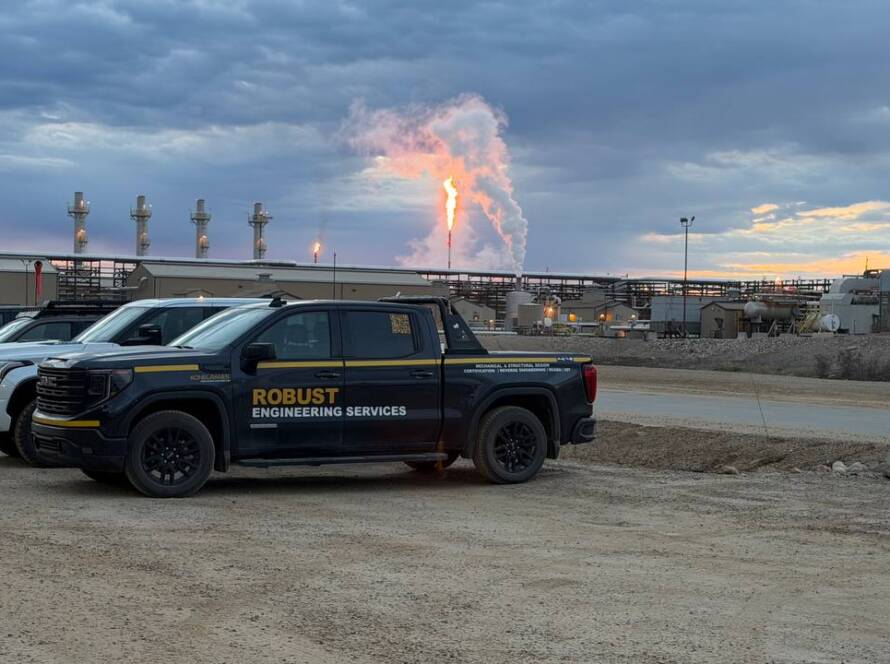
A new piece of equipment went on the truck this month: a roof-mounted LED light bar.
To anyone driving past, it probably reinforces the impression the wrap already creates — a black GMC Sierra with bright orange Robust Engineering stripes and a light bar on top is the visual shorthand for pavement princess. It is not. The light bar is a tool, and the wrap is a deliberate piece of business infrastructure. Both earn their keep on a typical week.
Why an engineer needs a light bar
Most of my fieldwork happens inside places that were not designed with engineering inspection in mind. Steel mills. Coal terminals. Paper mills. Underground and surface mining operations. The crane runways themselves live thirty to sixty feet above the working floor, often in buildings where the ambient lighting was sized for the original 1970s production layout and has not been touched since. A flashlight gets you partway. A head torch gets you closer. A bar of LEDs across the cab means a parked truck can light up the side of a building, an outdoor runway, a load-test setup, or a yard’s worth of below-the-hook gear well enough to take a measurement, a photograph, or a deflection reading.
Calgary makes the argument stronger. From mid-November through early February, sunrise is after 8 AM and sunset is before 5 PM. A 7 AM client arrival means setting up in the dark. A 4:30 PM finish on a roof or a runway means writing notes by the light of a phone screen. The light bar gives back the daylight the season takes away.
Why the truck looks the way it does
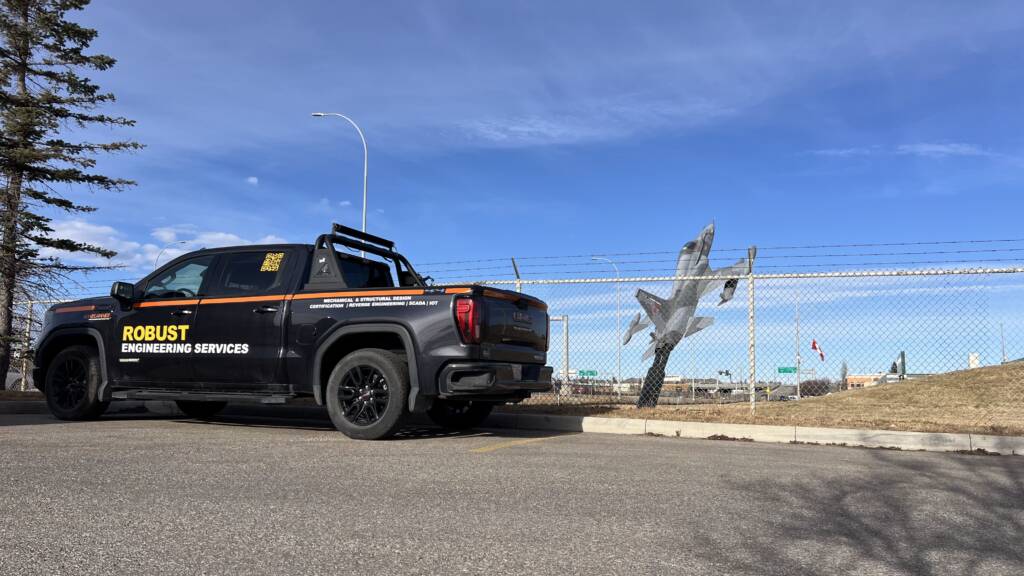
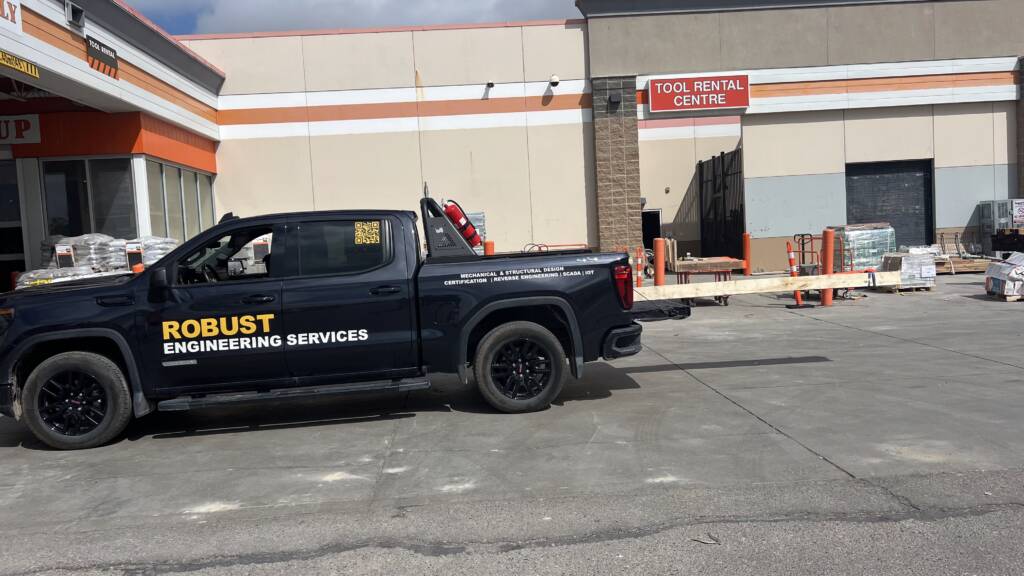
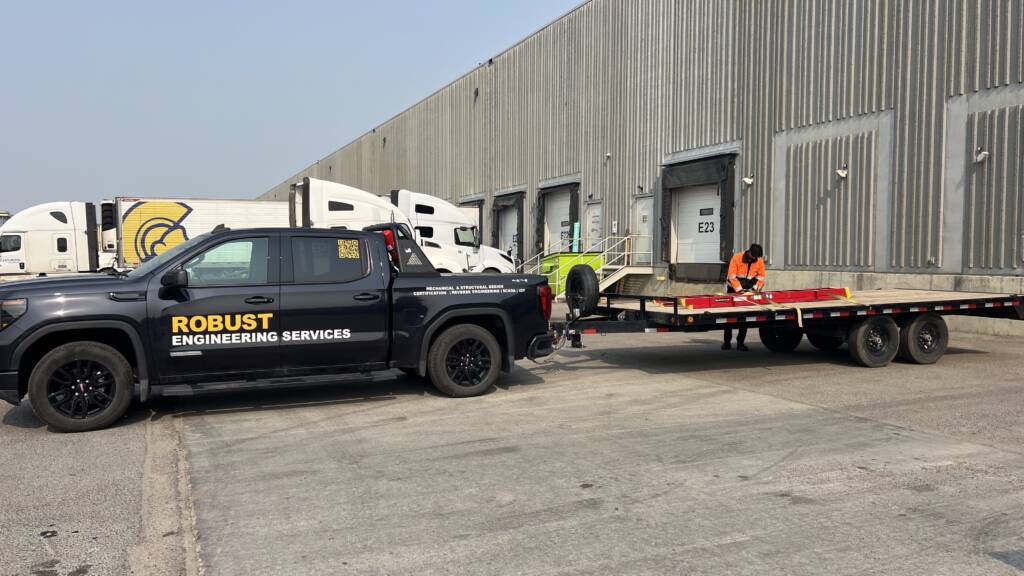
The vehicle is a GMC Sierra crew cab. The wrap is intentional: black base, orange accent stripes that match the brand, the company logo and contact details on the doors, the Konecranes Preferred Contractor badge below them, and the service categories — Mechanical and Structural Design, Certification, Reverse Engineering, Millwright — running across the rear quarter. The QR code on the rear window points back to robustengineering.ca. People do scan it in client parking lots.
There is a defensible reason the truck looks this way, and it is not vanity. The bulk of the work flows through two channels: direct Konecranes referrals, and clients who recognize the truck on a site they were not expecting to see it on. When you pull into a steel yard at 6:30 AM and the operations manager has not yet had coffee, the truck answers a few questions before you do. It says serious, equipped, branded, accountable. In industrial settings, strangers in the yard get questions asked, and a clearly branded truck telegraphs intent before the driver does.
A beige sedan does not tell a maintenance superintendent anything. A wrapped truck with a light bar, a tool chest, and lifting gear in the bed signals that you came to do work, not to write proposals.
The link, for those who asked
The unit on the roof is from Amazon: https://a.co/d/8Wo5l1U. It is a combination spot-and-flood LED bar, wired through a relay to a switch panel inside the cab. Nothing exotic, no exotic price tag.
The bigger point
Engineering is a serious profession. It is also a service business. The truck is both a tool and a marketing channel, and there is nothing in the APEGA Code of Ethics that says either of those has to look boring.
If you are running a small engineering practice and the prospect of paying for a truck wrap feels frivolous, consider what the alternative communicates. Showing up unmarked is a choice, and not necessarily a flattering one. The wrap, the light bar, and the gear in the bed are all part of the same statement: this is a working firm, not a side hustle, and it brought what it needs to do the job.